


.avif)
When the Pressure to Use AI Becomes the Real Risk
The number one challenge for HR in 2026 isn’t adopting AI. It’s the growing pressure to use it, fast, visibly, and everywhere.
AI is now embedded across the HR technology landscape. From HCM suites to engagement tools and analytics platforms, intelligent features are no longer emerging, they’re expected. CEOs ask about them. Boards reference them. Vendors position them as table stakes.
But as analyst research from voices like Stacia Garr (RedThread Research) highlights, this momentum comes with a real risk: AI may not automatically make HR more strategic. In fact, without intention, it can quietly do the opposite.
The Promise and the Reality of Strategic HR
For years, the story was compelling. AI would take on repetitive, administrative work and free HR to focus on higher-value priorities like workforce strategy, leadership development, and organizational effectiveness.
In 2026, many of those capabilities exist. AI can analyze sentiment, predict turnover risk, personalize learning paths, generate insights, and automate workflows at scale.
What’s becoming clear, however, is that having AI doesn’t guarantee strategic impact.
In practice, AI is also:
- Driving leaner HR teams
- Making work less visible when it’s automated
- Shifting perceived value from people to platforms
- Allowing managers to access recommendations without involving HR
As Garr points out, when strategy is embedded in software, and not owned by HR, authority and influence can erode.
Are CHROs Really AI Laggards?
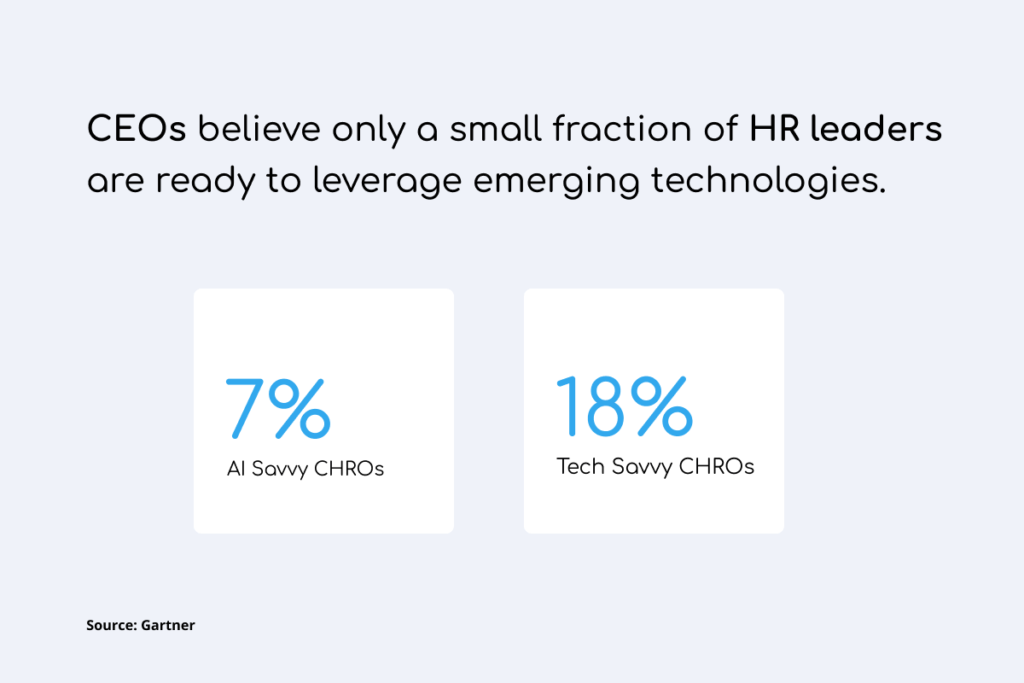
Recent Gartner research suggests CEOs see CHROs as the least AI-savvy leaders in the C-suite. It’s a troubling data point, but it may not tell the full story.
As highlighted by Anita Lettink (HR Tech and Payroll Advisor) HR operates under a unique set of constraints. Decisions about AI involve employee trust, privacy, ethics, and long-term cultural impact. Unlike other functions, HR doesn’t build its own tools, it depends on vendors to embed AI responsibly into enterprise platforms.
Notably, 2025 was the first year many HCM providers released mature, scalable AI capabilities. What looks like slow adoption may actually be deliberate adoption waiting for solutions that are integrated, governed, and ready for real organizational use.
The challenge in 2026 isn’t whether HR believes in AI. It’s whether HR is prepared to lead with it.
As highlighted by Anita Lettink (HR Tech and Payroll Advisor) HR operates under a unique set of constraints. Decisions about AI involve employee trust, privacy, ethics, and long-term cultural impact. Unlike other functions, HR doesn’t build its own tools, it depends on vendors to embed AI responsibly into enterprise platforms.
Notably, 2025 was the first year many HCM providers released mature, scalable AI capabilities. What looks like slow adoption may actually be deliberate adoption waiting for solutions that are integrated, governed, and ready for real organizational use.
The challenge in 2026 isn’t whether HR believes in AI. It’s whether HR is prepared to lead with it.
A Strategic Crossroads for HR
HR now sits at a defining moment. AI can elevate HR’s role by strengthening insight, foresight, and decision-making. Or it can push HR toward a narrower focus on system configuration, compliance, and risk oversight.
The difference is not the technology, it’s the choices surrounding it.
What Analysts See Strategic HR Leaders Doing Differently
Across analyst research and market observation, a pattern is emerging. HR teams that are gaining strategic ground in 2026 are:
- Owning AI decisions, not just implementations
They are involved early in how AI is selected, deployed, and governed, rather than reacting to tools after the fact.
- Thinking in systems, not features
They focus on business problems and workforce outcomes, not individual AI capabilities.
- Building AI fluency inside HR
They understand how models are trained, where bias can occur, and how insights should be interpreted even if they don’t build the technology themselves.
- Measuring outcomes that matter to leadership
Instead of tracking usage and efficiency alone, they connect AI to trust, agility, leadership effectiveness, and workforce alignment.
The State of HR and AI in 2026
AI will continue to reshape HR. That’s inevitable. What’s still undecided is whether HR will be defined by automation, or use automation to expand its influence and impact.
In 2026, being strategic isn’t about being first to adopt AI. It’s about being deliberate, informed, and confident enough to lead with it. And that may be the most strategic choice HR can make.
Where Semos Cloud Fits In
At Semos Cloud, we believe AI should strengthen HR’s strategic role, not replace it or push it to the margins.
That’s why our People and Culture Intelligence Platform is designed to help HR leaders move beyond isolated AI features and toward connected, insight-driven people systems. By combining recognition, engagement, manager intelligence, and analytics, we help HR teams turn AI-powered insights into action while keeping ownership, ethics, and context firmly in HR’s hands.
In a time when pressure to “use AI” is high, Semos Cloud supports a more deliberate approach:
- AI that amplifies human judgment, not bypasses it
- Insights tied to culture, trust, and performance, not just efficiency
- Tools that align with HR strategy, not just vendor roadmaps
If the future of HR is going to be more strategic because HR leaders choose platforms that help them lead, not just automate.
Learn how Semos Cloud helps HR turn AI into a strategic impact.


Ready to unify your people programs?
Stop running recognition, rewards, communications, and development in silos. See how Semos Cloud brings it all together in one AI-powered platform, built for enterprise, certified for compliance, and proven at scale.