


- Italy’s early experience suggests that employee request volume is highest where pay decisions have historically lacked visibility.
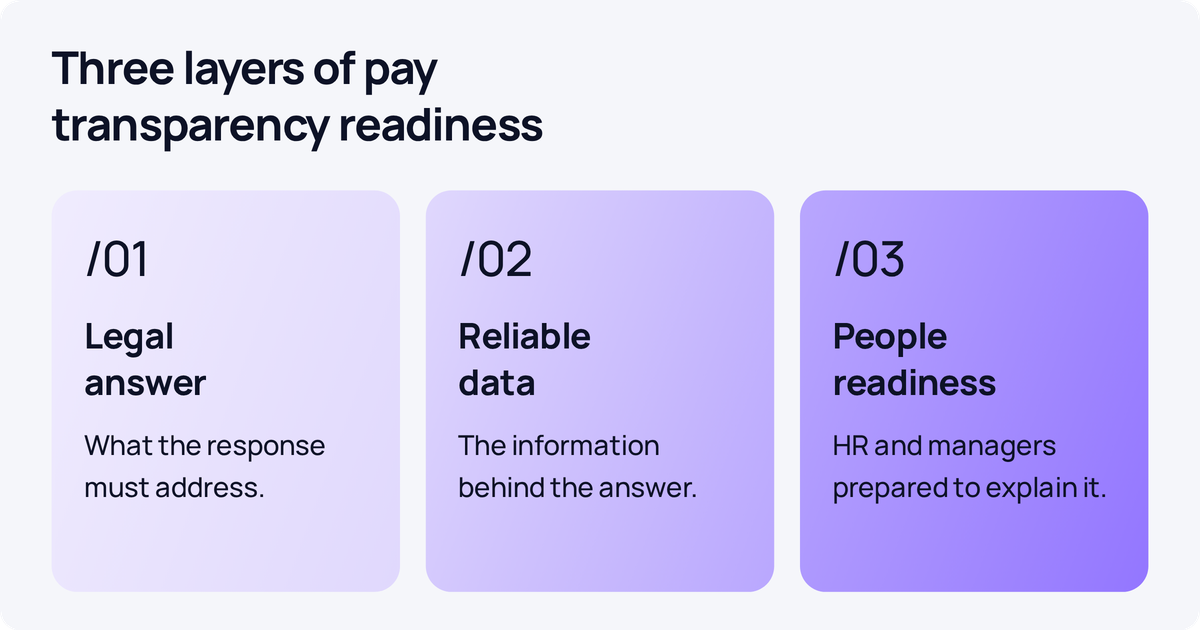
- Readiness depends on three layers: a legally sound answer, reliable data and people who can explain the result clearly.
- Request volume can reveal the gap between an employer’s stated pay practices and employees’ trust in how decisions are made.
- HR teams need to prepare managers for the conversations that follow each formal information request.
- Proactive communication can reduce avoidable requests and make future pay conversations more credible.
Italy was among the first EU countries to transpose the Pay Transparency Directive, and the deadline held. That means a handful of us are now watching something most of Europe won't see for another year: what actually happens in the first weeks after the right to information becomes real.
I've spent the last few months inside these implementations. The pattern emerging in the earliest days is not the one most companies prepared for, and it's worth sharing before the rest of Europe reaches the same point.
Italy’s early experience suggests that pay transparency request volume depends heavily on how clearly employers already explain compensation decisions. Compliance and accurate data matter, but HR and managers must also be ready to turn a legally correct answer into a credible conversation.
Why companies prepared for the wrong pay transparency problem
In the run-up to the deadline, almost every company treated this as a data and compliance exercise. Define the categories of workers. Run the gap analysis. Prepare the calculations. Get the legal text right. That work is necessary, and for many companies it was as significant effort.
But compliance on paper is only one layer. When an employee exercises their right to ask how their pay compares to colleagues doing work of equal value, three things get tested at once: the legal answer, the data behind it, and the readiness of the people who have to deliver it. HR, recruiters, and above all the direct manager. Most of the preparation I saw went into the first two layers. The third was treated as something to handle later.
Why employee pay transparency requests vary between companies
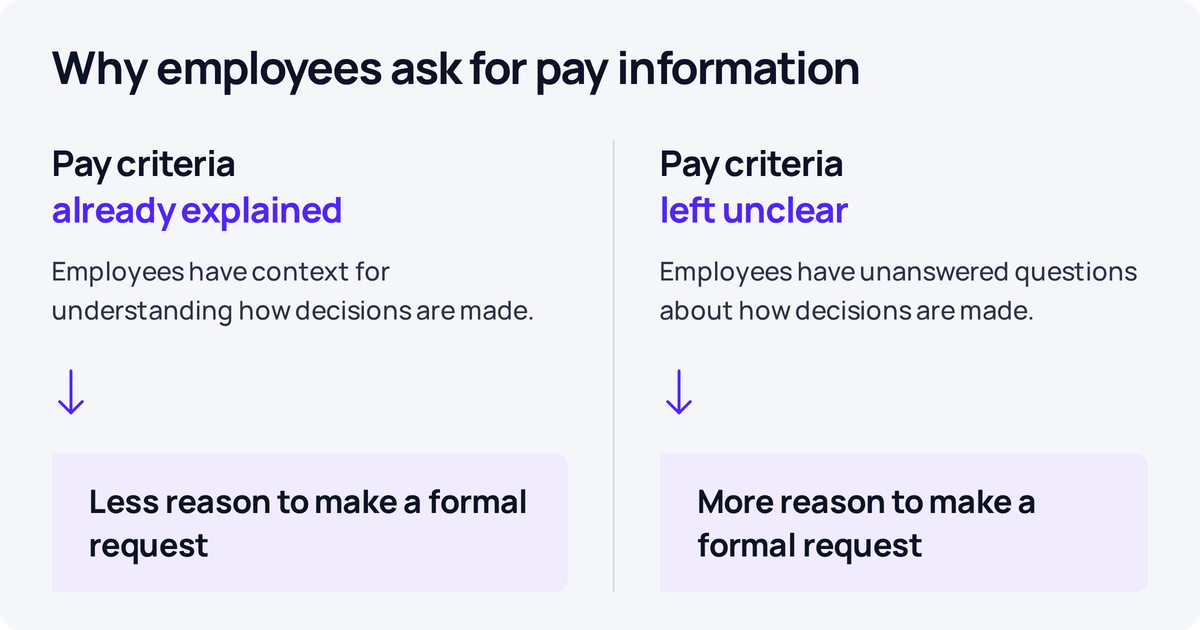
Here is what the first days revealed. The volume of employee requests is not the same across companies, and the difference isn't random.
Some companies have received almost no questions. When I look at why, the common factor is that these companies already communicated openly about pay. Employees already understood the criteria, the methodology, roughly where they stood. The directive gave them a new right, but they had little reason to use it, because the information was already there.
Other companies are seeing real volume. These tend to be the ones where, rightly or wrongly, compensation had been kept mostly to contractual matters, with little communication around how pay is actually decided. For those employees, pay had been an HR black box. Something they had no visibility into and no way to understand. Now they have a legal right to look inside, and they are using it.
[cta]
Why request volume reflects trust, not just workload
The instinct is to ask how many employees will exercise the right, and to plan capacity around it. That matters. A company of 15,000 where one in a thousand people asks is a very different situation from one where half do, in terms of the HR capacity and the automation you need behind the process.
But the volume is a symptom. What it's really measuring is not only how much distance there is between what your company has communicated about pay and what the directive now requires you to explain. It also reflects whether employees see consistency between what the company says and what it actually does across its people practices, and the level of trust that consistency has built over time.
Where policies and day-to-day decisions align, employees are more likely to approach the new right as a source of confirmation. Where they do not, the same right becomes a way to test the employer's credibility. The wider the transparency gap, and the lower the trust, the more requests you'll get and the less prepared your managers will be for the conversations that follow. Because a request for information does not stay a document. It becomes a conversation between an employee and their manager, and that manager has to explain the reasoning behind a number without further weakening trust.
Four steps to prepare for pay transparency requests
Most of Europe hasn't reached this point yet. France, Germany, Spain, Belgium, and others have not yet transposed, and each will give the directive its own flavor, so the specifics will vary. But the underlying lesson from Italy's early weeks travels well, and there are things worth doing now rather than in the final rush.
1. Look honestly at how much you've actually communicated to employees about how pay works, and at whether your people practices consistently match what the company says. Together, transparency and trust predict more about your coming workload than any calculation will.
2. Close the easy part of the gap through communication, before the requests arrive. Every question you answer proactively is one that doesn't arrive as a formal request landing on an unprepared manager.
3. Prepare HR before managers. Requests escalate. If the HR business partner, the recruiter, and payroll aren't ready to answer, the manager has nowhere to turn.
4. And accept that you won't look perfect. No company can honestly claim every past pay decision was made in flawless fairness, especially when many of those decisions were made before anyone knew these rules were coming. The companies handling this well aren't the ones pretending otherwise. They're the ones being straight about what they found and committing to fix it over time. That, more than any calculation, is what protects trust.
Pay transparency will ultimately be judged not by how well companies answer requests, but by whether employees learn they can trust the answers.
[cta-2]


Explore related articles



Ready to unify your people programs?
Stop running recognition, rewards, communications, and development in silos. See how Semos Cloud brings it all together in one AI-powered platform, built for enterprise, certified for compliance, and proven at scale.