


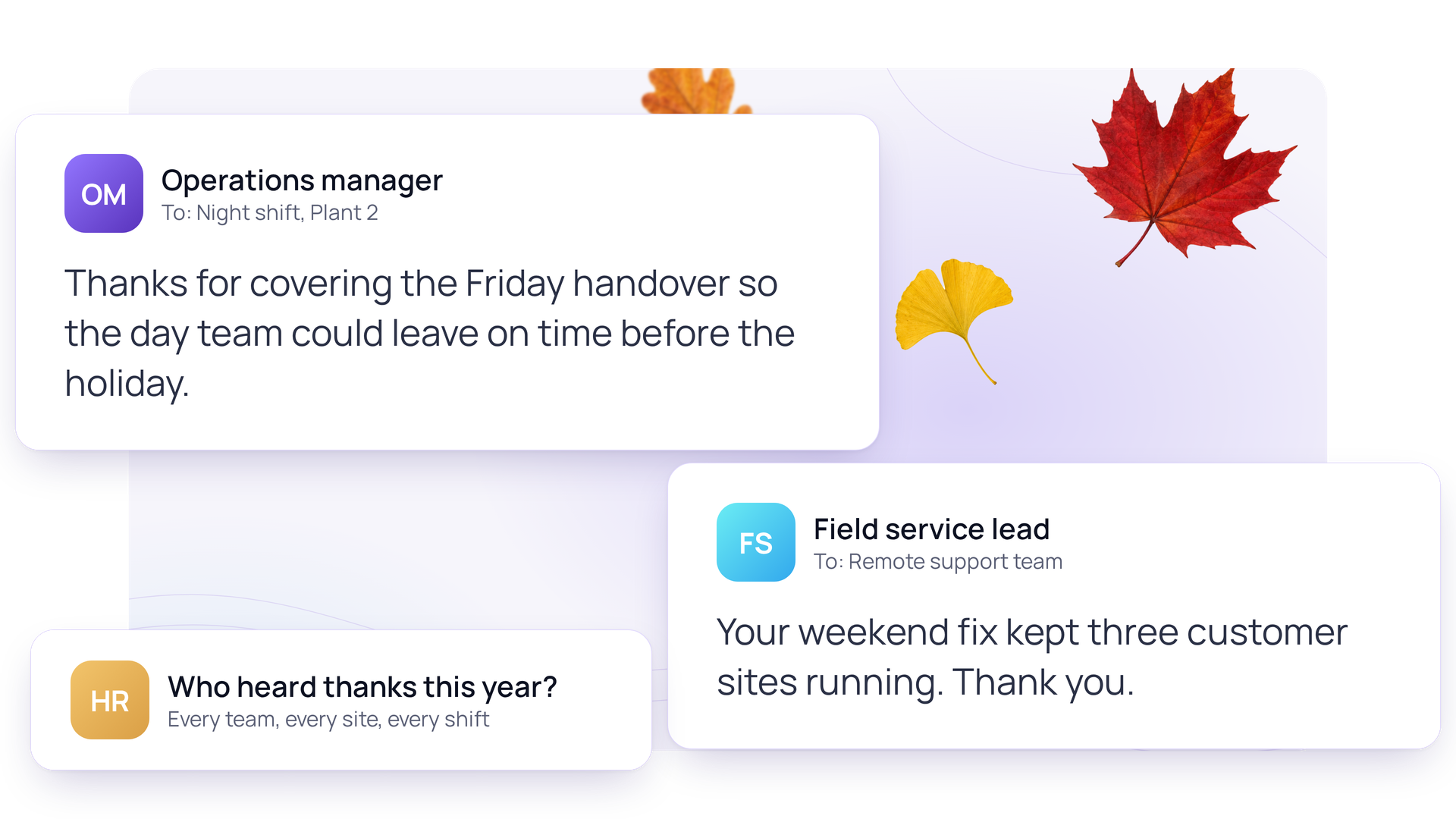
Tomorrow, many companies will send a Thanksgiving email thanking everyone for a great year. A message that thanks everyone in general is easy to forget by January, because it names no one in particular.
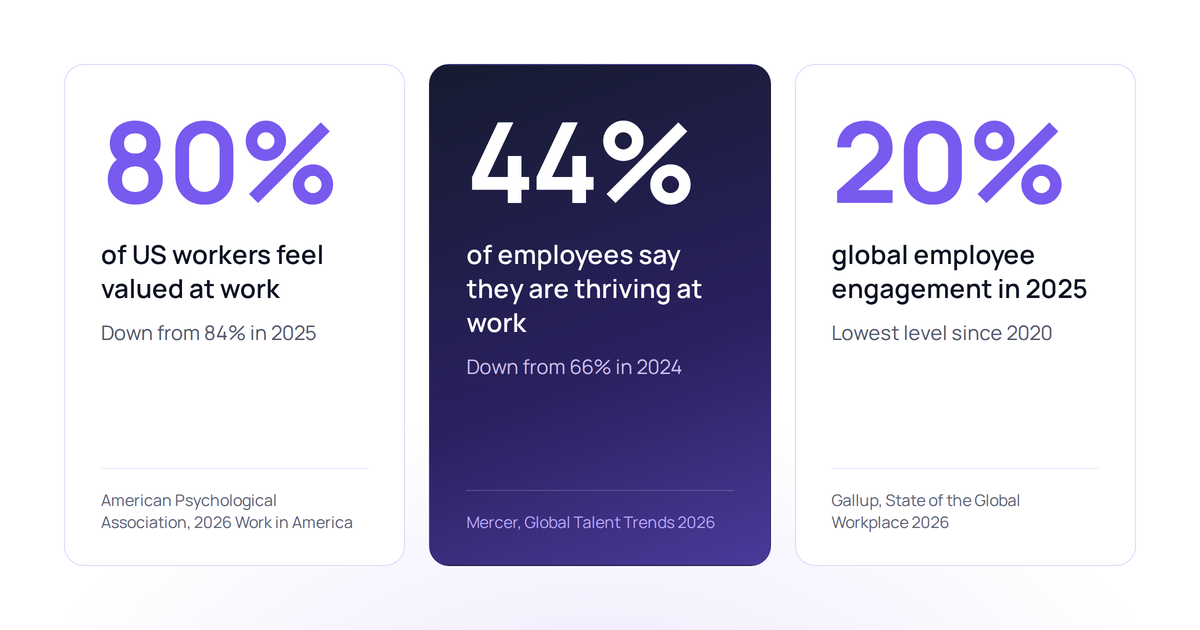
That gap matters more this year. The American Psychological Association's 2026 Work in America survey found that fewer US workers feel valued at work than a year earlier: 80%, down from 84% in 2025. Changing it takes specific, frequent thanks throughout the year.
This guide is for HR, Total Rewards, Internal Comms and EX leaders who want gratitude to outlast the holiday week, and who need a way to see whether it reaches everyone.
What is gratitude in the workplace?
Gratitude in the workplace is the regular practice of noticing what people contribute and telling them, specifically and soon. HR teams often use it interchangeably with appreciation and recognition, but the three show up differently in the data.
Gratitude is the most frequent of the three and the hardest to see. When it is specific and regular, it gives appreciation something to rest on, and a recognition program gives it a structure HR can track.
Why does gratitude at work matter more in 2026?
Three large 2026 studies describe a workforce that feels stretched and under-noticed:
- Fewer people feel valued. In the APA survey, 95% of workers said it is important to work for an organization that values their emotional and psychological well-being, yet the share who feel valued fell from 84% to 80%.
- Fewer people are thriving. Mercer's Global Talent Trends 2026 found that only 44% of employees say they are thriving at work, down from 66% in 2024.
- Engagement is falling. Gallup's State of the Global Workplace 2026 reports that global engagement fell to 20% in 2025, its lowest level since 2020, at an estimated cost of $10 trillion in lost productivity.
None of these studies measures gratitude directly. They do describe the conditions in which a specific thank-you carries the most weight: people who are working hard and wondering whether anyone noticed.
Does recognition affect retention?
Research links feeling unrecognized to plans to leave. In a 2016 Gallup analysis, only one in three US workers strongly agreed they had received recognition or praise for good work in the past seven days. Employees who did not feel adequately recognized were twice as likely to say they would quit in the next year.
More recent research points the same way at a broader level. In SHRM's 2026 State of the Workplace research, 51% of workers who say their organization is ineffective at addressing workplace needs are at least somewhat likely to leave within a year.
Intent to leave is a signal, and recognition is one factor among many. It is also one of the few retention levers any manager can use this week at no cost.
Why do managers struggle to say thank you consistently?
Most thanks at work flows through managers. In the same 2016 Gallup analysis, the most memorable recognition came most often from an employee's manager (28%), followed by a senior leader or CEO (24%).
Managers are also the most stretched group in the organization. A Gartner survey published in April 2026 found that 47% of managers say more is expected of them and they must work harder than a year ago. Managers spend an average of nine hours a week, more than 20% of their working time, on employees' personal and emotional concerns. Gallup reports that manager engagement fell from 27% to 22% between 2024 and 2025, the largest year-over-year drop in its data.
Telling overloaded managers to "show more gratitude" adds one more item to a full list. HR can make the habit lighter:
- Prompt thanks at natural moments: the end of a project, the year-end review, the last shift before holiday leave.
- Give managers short message starters they can personalize in a minute.
- Show each manager who on their team hasn't heard from them in a while.
How can HR make gratitude last beyond Thanksgiving?
Thanksgiving opens the busiest stretch of the year for many teams. In a Modern Health survey of 1,000 US full-time employees (November 2025), 57% said the holidays are the most draining time of year, 57% said they struggle to re-engage afterward, and 40% had considered quitting because of holiday burnout or dread about returning to work.
Five practices carry gratitude through year-end:
- Name the contribution. Replace "thanks for a great year" with one sentence about what the person did and why it mattered.
- Thank people before they log off. A note before holiday leave lets them start the break knowing their work counted. The same note sent in January competes with a full inbox.
- Protect the time off you are thanking them for. Modern Health found that 57% of employees feel obligated to check email while on holiday. A thank-you followed by a request on December 26 cancels itself out.
- Plan the January follow-up. A specific thank-you in the first week back reconnects people to the work they left.
- Include the people who keep things running. Frontline, shift, support and on-call teams often work through the holidays and are the easiest to leave out of a company-wide email.
How do you know whether gratitude reaches everyone?
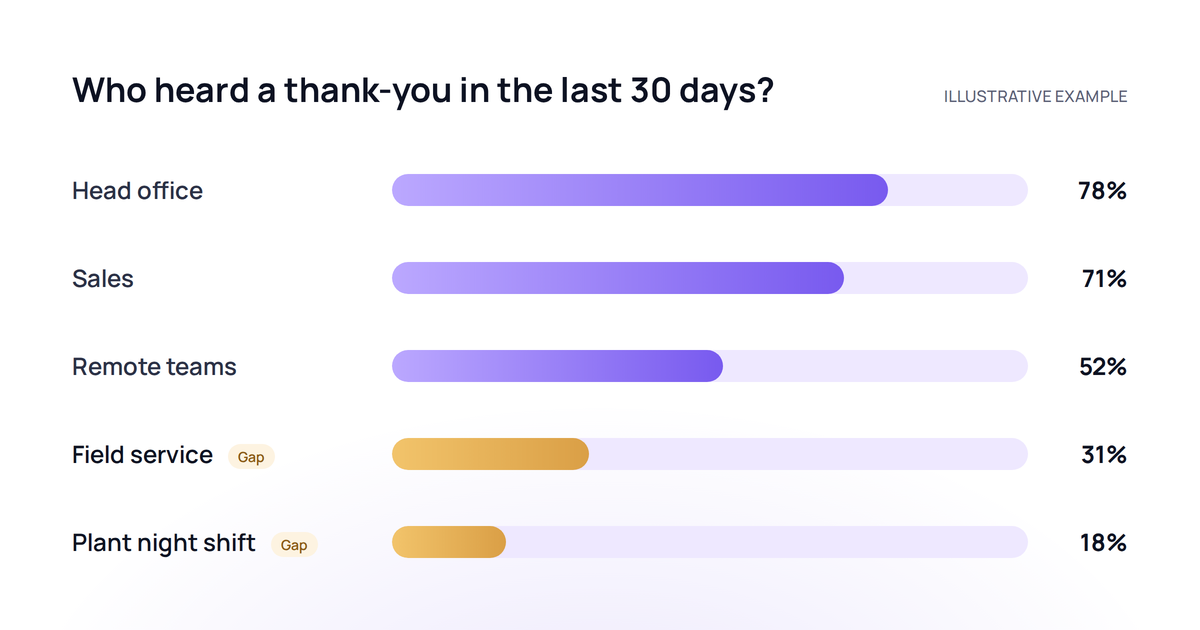
A company can send thousands of thank-yous in a year and still miss entire sites, shifts or teams. Four questions show where the gaps are:
- Which teams, locations and roles receive thanks, and which rarely do?
- How often does each manager recognize their people?
- Do frontline and remote employees get the same share as office teams?
- Do the groups that receive the least recognition also report feeling less valued, or leave more often?
Answering these questions requires recognition data to sit next to the rest of your people data. When thank-yous live in one tool and org structure, tenure and attrition live in the HCM, the gaps are hard to see.
Semos Cloud approaches this as People & Culture Intelligence: one AI-powered layer on top of your HR suite that connects rewards, communications and talent development. Semos IQ reads how employees experience work across recognition, EX, communications, listening, rewards and manager moments, so leaders see culture, performance and risk patterns in context. Semos Cloud connects natively with SAP SuccessFactors, Workday and Oracle HCM, so recognition data can sit alongside the people data you already manage there.
Start with one specific thank-you
Thanksgiving gives every company a reason to say thank you. Keep going past it: choose one practice for the holiday weeks, plan the January follow-up, and check which teams went unthanked this year. If you'd like to see how recognition data can sit next to the rest of your people data, request a demo and we'll walk you through it with your own HR setup.
[cta-3]
Frequently asked questions
What is an example of gratitude in the workplace?
A manager writes to a shift lead: "Thanks for covering the Friday handover so the team could leave on time before the holiday." The message names the action, explains why it mattered and arrives soon after.
What is the difference between gratitude and recognition at work?
Gratitude is informal thanks for a specific contribution, and anyone can give it. Recognition is formal acknowledgment of results or behavior, usually through a program and sometimes with a reward. Recognition programs make gratitude visible and trackable.
How often should employees be recognized?
Gallup's 2016 analysis used recognition in the past seven days as its benchmark and found that only one in three US workers strongly agreed they had received it. Weekly is a practical target for managers.
How do you measure gratitude and recognition at work?
Track how often recognition happens, who gives it and how widely it reaches across teams, locations and roles. Then compare those patterns with "feeling valued" survey results, engagement and retention in the same groups.
How can HR reduce holiday stress for employees?
Thank people before their leave, protect time off from after-hours requests and plan a re-engagement message for the first week of January. In Modern Health's 2025 survey, 57% of US employees said they feel obligated to check email while on holiday.
Semos Cloud adds one AI-powered layer on top of your HR suite, so recognition sits next to your people data and leaders see culture patterns in context.


Ready to unify your people programs?
Stop running recognition, rewards, communications, and development in silos. See how Semos Cloud brings it all together in one AI-powered platform, built for enterprise, certified for compliance, and proven at scale.