


%202.avif)
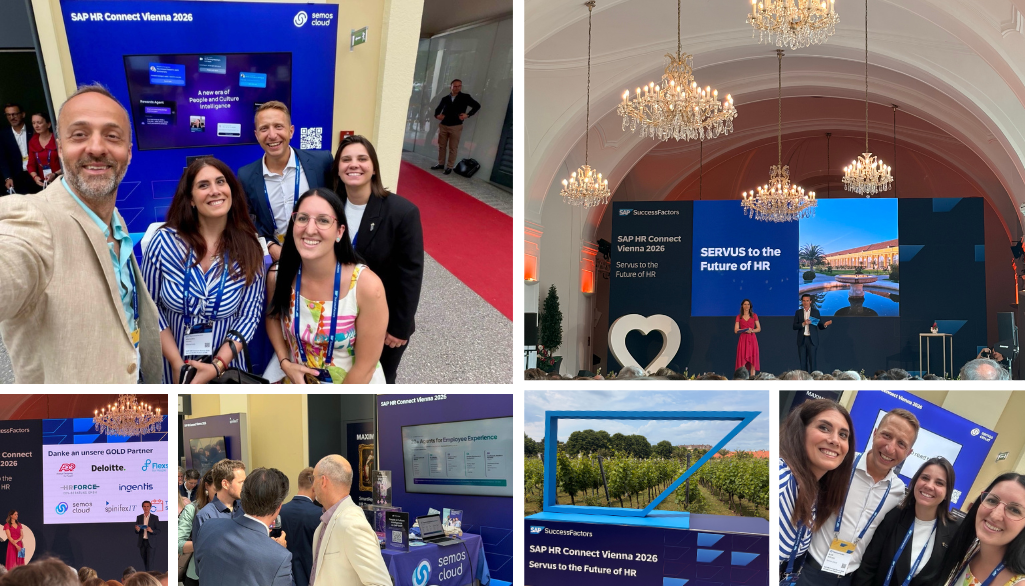
Key takeaways from SAP HR Connect Vienna 2026:
- Pay transparency is an architecture question now. The EU directive made it mandatory; the real work is building infrastructure that makes compliance repeatable.
- AI has the most traction where the business case is concrete: manager coaching, recognition prompts, benefits guidance.
- Skills-based org frameworks are mostly built. The activation gap, connecting backend infrastructure to daily manager and employee experience, is where the work is.
- Employee experience is becoming the primary measure of HR program success, not adoption rates or system usage.
Pay transparency is now an architecture question
Pay transparency came up in more conversations than any other topic, and the framing has shifted. The EU Pay Transparency Directive and ESRS workforce reporting requirements have moved this from a values discussion to an implementation decision. Leaders at the event were not asking whether to act. They were asking what infrastructure to build to make compliance defensible and repeatable.
"What struck me at Vienna was how quickly the pay transparency conversation has matured. A year ago it was about intent. Now it's about architecture, what systems to build, what data to surface, and how to make it auditable."
- Ilija Kiroski, Head of Partnerships, Semos Cloud
The organizations further along are implementing Total Rewards Hub, consolidating compensation, benefits, and equity data into employee-visible formats. Treated as a capability investment, it earns back time at every reporting cycle.
[cta]
AI is in every conversation, the signal is where it has traction
AI came up across roles that had nothing to do with technology. Most organizations attending have started embedding it. The question now is which applications deliver visible daily value.
From what we heard: manager coaching support, recognition prompts, and benefits guidance are drawing the strongest evaluation interest. They have concrete use cases and a business case that travels across HR and Finance. Security conversations surfaced early, especially in financial services. That's a sign of serious evaluation, not hesitation.
Skills infrastructure is ready. The activation layer is not.
A customer keynote demonstrated skills-based organization infrastructure mapped directly into SuccessFactors. The architecture is there. What's missing in most organizations is the connection between that backend framework and what employees and managers actually experience day to day.
Recognition is one activation path. When skills frameworks connect to everyday recognition behavior, they shift from administrative records to felt experience, and the engagement and retention data follows.
[cta]
Employee experience is the measure that matters
Across every conversation at HR Connect Vienna, one question kept surfacing: how do employees actually feel the impact of HR investments? Leaders are increasingly measuring the success of people programs not by adoption rates or system usage, but by whether employees and managers notice a difference in their day-to-day work.
The organizations making headway are closing the gap between HR infrastructure and lived experience. That requires more than technology. It requires Culture Intelligence, the ability to read how people actually feel, what recognition behaviors are showing up, where manager effectiveness is strong or thin, and what the workforce signals before it becomes a retention problem.
When Culture Intelligence is built into the experience layer, HR stops reporting on what happened and starts acting on what's happening.
"The enterprises we work with have invested heavily in SAP SuccessFactors. The question is no longer whether the infrastructure is there. It's whether that investment reaches the people it was built for. That's the layer we focus on."
- Filip Misovski, CEO, Semos Cloud
How it all connects
These initiatives run on the same SuccessFactors data. Organizations getting the most out of their investment are treating them as one system: transparent pay, AI-supported managers, connected skills, and employee experience all feeding the same people layer.
That's the layer Semos IQ adds.
If any of these themes map to what your team is working through, we're worth talking to. [Book a conversation.]
Questions we heard at Vienna (and our answers)
Where do most organizations start with pay transparency?
Most start with a data audit: what compensation and benefits information exists, where it lives, and what gaps exist before anything can be made employee-visible. Total Rewards Hub give you a structured place to consolidate that data and build from it.
Is AI in HR practical right now or still mostly pilot-stage?
It depends on the use case. Generic AI transformation is still largely exploratory. Manager coaching support, recognition prompts, and benefits guidance have clear business cases and are moving into active evaluation. That's where the traction is.
We have skills data in SuccessFactors. Why aren't employees engaging with it?
Skills frameworks built in the backend rarely reach employees organically. Without a connection to everyday workflows like recognition, feedback, or manager interactions, they stay as administrative records. The activation layer is what closes that gap.
How do we measure whether our HR technology investments are actually working?
The leaders at Vienna are shifting from system adoption metrics to employee and manager experience signals. Are managers acting differently? Are employees noticing their programs? That's the measure that's starting to matter.
How do we know what employees actually feel, not just what the system records?
That's where Culture Intelligence comes in. It reads recognition behaviors, manager effectiveness signals, and workforce patterns before they surface as retention or engagement problems. The difference between reporting on what happened and acting on what's happening.


Ready to unify your people programs?
Stop running recognition, rewards, communications, and development in silos. See how Semos Cloud brings it all together in one AI-powered platform, built for enterprise, certified for compliance, and proven at scale.